


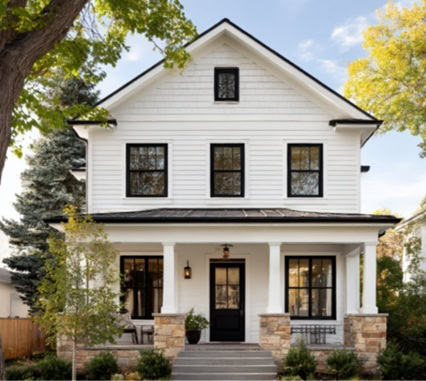
Start with the Look Your Home Already Has
The right profile for vinyl siding in Hoffman Estates, IL homes is usually the one that complements the house instead of trying to transform every surface at once. Roof pitch, window proportions, brick areas, shutters, porch posts, and the height of the exterior all influence whether a siding profile feels balanced or out of place.
Common siding styles include horizontal lap panels, vertical panels, shake-style accents, and board-and-batten designs. Each creates a different visual pattern across the exterior. Rather than choosing the most dramatic option from a small sample board, the goal is to select a profile that complements the home's overall architecture and creates a cohesive appearance from the street.
Traditional homes often look best with a classic horizontal lap profile because it follows the familiar proportions of many two-story and colonial-style exteriors. That does not mean every traditional home requires the same solution. A prominent front gable, tall entry, or large blank wall may benefit from a carefully placed accent, but the home's original character should continue to guide the design.
If you are collecting ideas, review these vinyl siding design ideas for Hoffman Estates homes with an eye toward proportion rather than color alone. Notice where the main siding stops, how trim defines transitions, and whether accent areas have a clear architectural purpose.
Consider the Visual Scale of Each Profile
Panel width changes the rhythm of the exterior. Narrower panels create more horizontal lines, while wider panels create fewer. Neither is automatically better, but each can change how large or busy a wall appears.
On a one-story home, a very wide profile can sometimes make a short façade feel flatter, especially when there is little trim or few window openings. A narrower or standard width lap panel may add useful visual movement without overpowering the structure.
Taller elevations often have more room for a wider profile. Fewer horizontal seams can make a broad wall look calmer and more unified. However, a wide profile on a compact home can also make window openings seem undersized if the scale is not considered first.
Pay special attention to these areas:
- Large side walls: Long, unbroken elevations show every siding line. Choose a profile that gives the wall enough rhythm without making it look striped.
- Front gables: Gables are highly visible but usually smaller than the main wall areas. Their profile should complement the primary siding rather than compete with it.
- Windows and trim: Narrow windows with narrow trim can get visually lost next to oversized panels. Wider trim can help create a stronger frame around the siding pattern.
- Split-level transitions: A change in wall height or material can make profiles look different from one section to another. Review the elevations together, not one wall at a time.
Decide How Much Shadow and Texture You Want
The profile's shape affects how sunlight creates highlights and shadows across the siding. This matters more than many homeowners expect, especially on front elevations that receive direct morning or afternoon light.
Subtle lap profiles create a clean, understated appearance and often work well when the roof, brick, stone, or trim already provides plenty of visual interest. More pronounced lap profiles create stronger shadow lines and additional dimension, making them a good choice for broader walls that benefit from added depth without overwhelming the home's architecture.
Vertical panels naturally draw the eye upward and can add definition to gables or other carefully selected accent areas. Shake or shingle accents introduce additional texture that is often most effective in smaller architectural features rather than across the entire exterior. When using accent combinations, the added texture should reinforce existing design elements, such as peaks, bump-outs, or entryways, instead of creating visual interest where no natural transition exists.
Ignoring shadow and texture can lead to a result that feels much busier outdoors than it did in a showroom. Strong sunlight highlights every profile line, while overcast conditions can soften the same surface. Reviewing siding profiles under the actual lighting conditions around your home helps create a more balanced final appearance.
Choose a Main Profile Before Adding Accent Areas
A cohesive exterior usually begins with one primary siding profile across most wall surfaces. Establishing a consistent base first makes it easier to coordinate trim, windows, gutters, entry doors, and other exterior details. Because the main profile covers the largest portion of the home, it should be selected before considering decorative accents.
Once the primary profile has been chosen, look at the home's natural architectural divisions. Gables, dormers, entry projections, and porch walls often provide logical locations for accent profiles, while large, uninterrupted wall surfaces generally benefit from a consistent appearance. Limiting the number of competing textures also helps maintain visual balance, since roofing, masonry, trim, and window grids already contribute their own design elements.
The overall color plan deserves the same level of attention. An accent profile may use the same color as the primary siding for a subtle change in texture or introduce a complementary shade for additional contrast. In either case, the final selection should coordinate with permanent exterior materials such as the roof, brick, or stone.
Before making a final decision, step back and evaluate the design from the driveway, sidewalk, or street. While homeowners often focus on details from just a few feet away, the finished siding will usually be viewed from a distance. Looking at the home from multiple perspectives helps confirm that the profile, accents, and overall composition feel balanced once everything comes together.
Look Beyond the Sample Board
A sample board is useful, but it is not a full-scale exterior. Before making a final decision, consider the conditions that can change how a siding profile looks after installation.
View Samples Outdoors
Whenever possible, hold siding samples against the exterior of your home. Indoor lighting cannot accurately show how natural sunlight affects color, texture, and shadow throughout the day.
Compare Changing Lighting Conditions
Review samples in direct sunlight, shade, and late-day light. A profile that appears subtle in one setting may create much stronger shadow lines in another, making it important to evaluate the siding under different conditions.
Look at Completed Homes
Ask to see homes where the same siding profile has already been installed. Viewing a full exterior makes it easier to evaluate panel scale, trim proportions, seam placement, and how accent areas work with the primary siding.
Coordinate Trim and Exterior Colors
The siding profile is only one part of the overall exterior. Corner posts, window trim, soffits, fascia, and gutter colors should complement the final design and create a cohesive appearance.
Review Installation Details
Ask how the siding will transition around windows, doors, rooflines, masonry, and other exterior features. Even an attractive siding profile can look unfinished if those transitions are not carefully planned and installed.
An early conversation is especially valuable when the project includes replacement windows, entry doors, and gutters. Planning these exterior improvements together helps ensure the siding profile, trim, and other design details create a cohesive finished appearance before final selections are made.
Weigh the Whole Exterior Plan with a Local Contractor
The best decision comes from weighing architecture, scale, texture, color, and installation details together. Bring photos of your home from several angles, images of styles you like, notes about features you want to keep understated, and any material or roof colors that will remain. That gives the discussion a practical starting point instead of relying on a small sample alone.
Lake Cook Exteriors, Inc. is a family-owned exterior remodeling provider serving Hoffman Estates and nearby Northwest Suburbs. Its appointment-only showroom allows homeowners to compare siding profiles, trim, windows, doors, and gutter details in one place. To discuss the full exterior plan with our vinyl siding specialists and choose vinyl siding options that Hoffman Estates, IL homeowners can feel confident about for years to come, call (847) 991-9180.
Frequently Asked Questions
Do Wider Siding Panels Make a House Look Larger?
Wider panels can make broad or tall walls appear calmer because there are fewer horizontal lines. On smaller homes, however, oversized panels may make windows and trim look out of proportion. Comparing full-size samples against the home's exterior is the best way to judge the overall scale.
Why Does Siding Look Different Outside Than It Does in a Sample Display?
Natural light changes how both color and profile appear throughout the day. Sunlight, shade, roof overhangs, and nearby trees all influence shadow lines and visual texture. Viewing samples outdoors helps homeowners understand how the finished siding will look after installation.
What Should I Bring to a Siding Consultation?
Bring photos of all sides of your home, inspiration images, and a list of exterior features that will remain, such as the roof, brick, stone, or shutters. Sharing your design preferences and long-term goals also helps narrow the profile options that best suit your home's architecture.