


Choose the Profile That Supports Your Home
Choosing between Dutch lap and beaded vinyl siding involves more than finding a color that complements your exterior. The shape of each siding profile influences how light falls across the walls, how architectural details stand out, and how the finished home appears from the street. For homeowners exploring Palatine, IL vinyl siding understanding these differences can make the selection process easier.
Both options are horizontal vinyl siding profiles, meaning the panels run across the exterior walls. Their main difference is in the edge design. Dutch lap creates a more pronounced shadow line, while beaded siding features a smaller decorative detail that produces a finer pattern.
The right choice depends on the home's proportions, roofline, window placement, and existing trim. Rather than selecting the most decorative option, homeowners should consider which profile complements the architectural features already present.
What Sets Dutch Lap Apart?
Dutch lap siding features a distinctive recessed detail near the upper portion of each course, creating a pronounced shadow line. This design gives horizontal siding a layered appearance that adds visual depth without requiring elaborate trim or decorative accents.
The stronger shadow pattern can work particularly well on homes with broad exterior walls. As sunlight changes throughout the day, the recessed detail becomes more noticeable, helping break up large surfaces that might otherwise appear flat.
However, the additional visual weight may not suit every exterior. Homes with narrow windows, detailed trim, or several decorative elements may already have enough texture. In those situations, a pronounced Dutch lap profile could compete with the home's existing features.
Panel quality still matters. A profile’s shadow line will not compensate for siding that appears uneven or poorly supported. Review how siding thickness affects wall performance alongside profile selection, since the material, wall preparation, and installation methods all contribute to the exterior's appearance and durability.
How Does Beaded Siding Change the Look?
Beaded siding creates a more refined pattern by adding a small rounded bead along the lower edge of each course. That bead catches light in a narrower, softer line than Dutch lap, giving the wall a more detailed but less heavily layered appearance.
This profile can complement homes with traditional trim, divided-light windows, columned porches, shutters, or other carefully scaled details. The bead introduces a tailored rhythm that can connect those elements rather than compete with them. It is not automatically the better choice for every traditional home, though. A plain, broad facade may need the stronger definition Dutch lap provides.
Beaded siding is especially worth considering when the homeowner wants a classic exterior that looks composed from close range as well as from the street. The detail is subtle enough that it does not dominate the facade, but it is visible enough to avoid a blank appearance.
Look at the house from both distances before deciding. From the curb, beaded siding may appear calmer than Dutch lap. Up close, the bead gives each course a finished edge and a more formal sense of craftsmanship.
See the Curb-Appeal Trade-Offs
Dutch lap and beaded siding can both create an attractive classic exterior, but their differences become clearer when comparing the same design factors. The table below highlights how each profile may influence the finished appearance.
| Factor | Dutch Lap | Beaded Siding | What It Means for Your Home |
|---|---|---|---|
| Overall appearance | Layered and dimensional | Refined and detailed | Choose the character that fits existing features |
| Shadow line | Deep, noticeable recess | Narrow, rounded highlight | Stronger shadows add more visual texture |
| Visual weight | More substantial | Lighter and more tailored | Large walls often handle heavier profiles well |
| Traditional fit | Familiar classic look | Formal classic detailing | Trim and porch elements influence the better match |
| Upkeep considerations | Horizontal joints need clear drainage paths | Same basic siding system needs proper installation | Profile choice does not replace sound wall preparation |
Neither profile eliminates the need for proper installation or routine exterior maintenance. Flashing, drainage, fastening, and transitions around openings remain important regardless of the siding design. Comparing the visual differences alongside these practical considerations can help homeowners make a more informed decision.
For a broader look at available materials and profiles, homeowners can explore vinyl siding styles and installation options before narrowing their selection.
Match the Profile to Your Exterior
The best siding profile should complement the home's overall design rather than stand out as a separate decorative feature. Wall proportions, rooflines, window arrangements, and existing materials all influence how Dutch lap or beaded siding will look once installed.
Evaluating these features together can help homeowners avoid choosing a profile that appears attractive on a sample but feels out of place across the entire exterior.
Which Profile Fits Your Home’s Scale?
Dutch lap often works well on wider homes with large, relatively simple wall surfaces. Its stronger horizontal lines can add depth and help create a more defined exterior appearance.
Beaded siding may be better suited to homes with taller windows, decorative trim, or other architectural details that already provide visual interest. Its smaller edge detail can complement these elements without overwhelming them.
Homeowners should view the house from the sidewalk or another location where the entire front elevation is visible. This perspective makes it easier to judge whether the siding profile creates the desired balance.
Trim Details Shape the Final Appearance
Trim influences how siding profiles appear around windows, doors, corners, and rooflines. Wider trim can create stronger contrast, while narrower or similarly colored trim may place more emphasis on the siding itself.
For example, a home with prominent white window surrounds may already have clearly defined architectural features. A more restrained siding profile could help those details remain the focus. On a simpler exterior, stronger horizontal shadow lines may add useful visual interest.
Before finalizing a profile, homeowners should also review the condition of existing trim and the installation requirements around exterior openings. Properly coordinated corner posts, receiving channels, soffit, and fascia contribute to a consistent appearance.
How Much Texture Do You Want?
Texture affects how the exterior looks under different lighting conditions. Dutch lap generally creates more noticeable shadows from a distance, while beaded siding provides finer detailing that becomes clearer up close.
When comparing samples, homeowners should consider several factors:
- Natural lighting: View samples outdoors at different times of day to see how sunlight changes the shadow pattern.
- Existing materials: Compare the siding with brick, stone, roofing, and other exterior finishes.
- Trim colors: Consider whether the profile complements or competes with window surrounds and corner details.
- Wall proportions: Evaluate how repeated siding courses may appear across larger sections of the home.
- Personal preferences: Decide whether a stronger layered appearance or a more restrained finish better suits the desired design.
Larger samples can provide a more realistic impression than small color chips alone. Seeing how several courses look together helps homeowners understand the overall pattern before making a final selection.
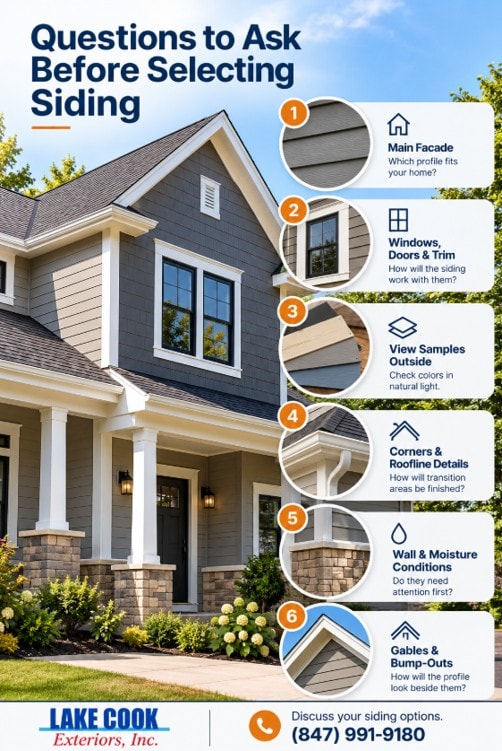
Questions to Ask Before Selecting Siding
A siding consultation provides an opportunity to compare appearance, installation requirements, and existing exterior conditions. Preparing a few questions can help homeowners evaluate the available options beyond color and profile design.
Consider asking the following:
1. Which profile best complements my home's architecture? Ask how the wall proportions, roofline, and existing trim influence the recommendation.
2. Can I compare larger samples in natural light? Viewing the materials outdoors can help reveal differences in shadow patterns and surface texture.
3. How will the selected profile work around windows, doors, and rooflines? Discuss the trim and finishing details that will frame the new siding.
4. Are there existing wall conditions that should be addressed? Ask whether moisture concerns, damaged trim, or other visible issues require further inspection before installation.
5. What installation and maintenance considerations should I understand? Review the installation process, product documentation, and applicable vinyl siding warranty and care information.
These questions can help connect the visual decision with the practical requirements of the project. A well-planned siding replacement should account for both the appearance of the selected profile and the condition of the exterior surfaces where it will be installed.
Choose the Right Siding Profile for Your Palatine Home
Dutch lap and beaded vinyl siding offer different ways to complement a classic home exterior. Dutch lap creates stronger shadow lines and a more layered appearance, while beaded siding adds finer detail that can work well with traditional trim and architectural features. The better choice depends on your home's proportions, existing materials, and the overall appearance you want to achieve.
Lake Cook Exteriors, Inc. can help homeowners compare siding profiles while considering the installation details that support a well-finished exterior. To discuss your options, consult with Palatine vinyl siding specialists or call (847) 991-9180.