


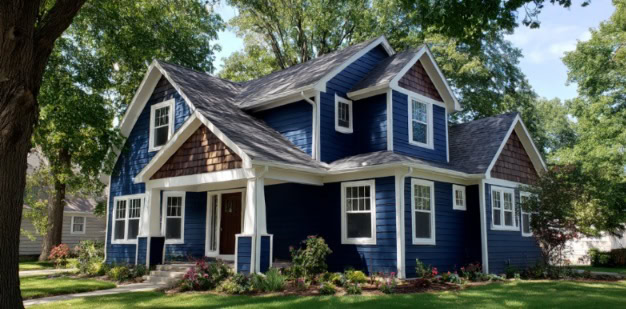
Texture can influence whether a home appears more formal, rustic, traditional, or modern. It affects shadow lines, how siding reads from the street, and whether the finished exterior feels suited to the roof, windows, and trim. When comparing vinyl siding options in Hoffman Estates, IL, start with the home's architecture rather than choosing a surface based on a small sample alone.
A pronounced wood-grain finish can add depth to a façade with simple shapes, while a smoother surface can keep sharp rooflines and large windows from looking crowded. Even the same color can appear noticeably different on a lightly textured panel than on a deeper grain pattern, particularly as sunlight changes throughout the day.
Timing matters as well. Early in the planning process, homeowners have more flexibility to choose a texture that supports the home's proportions. Once siding, trim, and other exterior selections are finalized, changing the texture may affect the overall design direction.
What Texture Works with Colonial, Traditional, and Transitional Homes?
Colonial and traditional homes often benefit from a more restrained approach. Their symmetry, centered entries, evenly spaced windows, and formal trim already establish visual order. Horizontal lap siding with a moderate, consistent texture can support those features without drawing attention away from the home's main architectural lines.
For these homes, the primary siding should usually provide a consistent visual foundation. A coordinated accent texture may work within a small gable or around a porch roof, but it should complement rather than compete with the main siding across the front elevation.
Transitional homes allow more flexibility because they combine familiar proportions with simpler architectural details. Even then, selecting one dominant texture first can help maintain balance. If the exterior needs additional depth, a limited accent area may be more effective than introducing different textures across multiple walls.
Before choosing panels, homeowners can review how siding profiles affect a home's scale to understand how profile and texture can work together across different architectural styles.
Craftsman, Cottage, and Farmhouse Homes Allow More Variation
Craftsman, cottage, and farmhouse designs often provide natural places for texture variation. Gables, porch walls, upper-story sections, and projecting bays can create defined architectural areas for a secondary finish.
The key is maintaining a clear hierarchy. The viewer should still recognize one primary siding treatment before noticing the accent.
Use Architectural Features to Define the Accent
A home with horizontal lap siding across the main walls may use a more distinctive texture within a front gable. Because the roofline naturally defines that area, the change can appear intentional rather than randomly added.
The same approach can work on dormers, porch sections, or upper-story projections where the architecture already creates a visual boundary.
Keep the Main Siding Consistent
Repeating accent textures across unrelated areas can weaken their effect and make the exterior appear pieced together. Keeping the primary siding consistent allows the secondary material to provide contrast without competing for attention.
Homeowners also do not need to reproduce every detail of an original architectural style exactly. Many properties have received new windows, roofing, doors, or porch details over time. The goal is to choose siding that respects the home's overall shape while working with the exterior as it exists today.
Should Modern Homes Use Smooth or Wood-Grain Vinyl Siding?
Modern and contemporary homes often work well with cleaner, lower-contrast surfaces. Smooth or subtly textured siding can reinforce broad wall planes, simple trim, and geometric window arrangements while keeping attention on the overall architecture.
More noticeable wood grain can still work, particularly when the exterior includes brick, stone, warm-toned doors, or other materials with natural variation. The siding texture should complement those elements rather than introduce another competing focal point.
Several exterior features can help guide the texture choice:
- Roofline: Simple or low-slope rooflines often pair naturally with cleaner siding textures, while detailed gables may accommodate additional visual depth.
- Window design: Large rectangular windows with narrow trim can complement smoother siding, while more traditional window styles may work well with a moderate grain.
- Trim width: Wider trim can balance a more noticeable siding texture, while minimal trim may benefit from a more restrained finish.
- Existing materials: Brick, stone, and decorative entry features already provide visual texture. A quieter siding surface can help keep the overall exterior balanced.
The goal is not necessarily to choose between smooth and wood-grain siding based on style alone. Instead, consider how the texture works with the home's roofline, windows, trim, and existing materials to create a balanced exterior.
How Can You Mix Siding Textures Without Making the Exterior Busy?
Mixed textures work best when they follow the home's existing structure rather than being scattered across the exterior simply for decoration.
- Choose the Main Texture First
Most of the home should generally use one consistent siding texture across the longest and most visible wall areas. Establishing the primary surface first makes it easier to judge whether an accent is actually needed.
- Place Accents on Defined Architectural Areas
Gables, dormers, porch sections, and upper-story projections can provide natural boundaries for a secondary texture. These areas help contain the change so it appears connected to the architecture.
- Create a Visual Connection Between Materials
Keeping the same color, coordinating the trim, or connecting the accent with another exterior material can help two textures feel related.
A home with several visible elevations should also be reviewed from more than the front. Side and rear walls may be prominent from a driveway, corner lot, or neighboring street.
One primary texture and one accent are often enough to establish contrast. Too many changes can break up the home's overall shape and make the exterior appear busier than intended.
Review the Complete Exterior Before Finalizing a Texture
A siding sample should not be evaluated by itself. Rooflines, windows, trim, doors, masonry, landscaping, and the home's overall scale can all affect how the selected texture appears once installed.
View Samples in Natural Light
Look at samples outdoors in direct sunlight and shade. Texture depth, grain patterns, and color undertones can appear different from how they look under showroom lighting.
Viewing a larger sample against the house can also provide a better sense of proportion than relying on a small product swatch.
Compare Texture with Existing Exterior Materials
Consider window-frame colors, entry doors, roofing, gutters, brick, stone, and other permanent or recently updated exterior features.
Because siding is the largest exterior surface on many homes, its texture should work naturally with the other materials rather than compete with them.
Consider the Size and Proportions of the Home
A subtle texture may become less noticeable across a large two-story façade, while a pronounced grain can feel visually heavy on a smaller home with low rooflines.
Comparing texture with the home's overall scale helps determine whether the siding supports the architecture rather than overpowering it. Homeowners who want help comparing these details can schedule complimentary consultations to discuss siding selection before finalizing their exterior choices.
Choose a Texture That Supports the Home's Architecture
The right siding texture should help the exterior feel intentional and balanced rather than simply newer. Architectural style, home size, roofline, window design, trim, existing materials, and accent placement should all be considered together.
Making these decisions while selections are still flexible also provides more time to compare full combinations rather than adjusting around materials that have already been ordered or installed.
Lake Cook Exteriors, Inc. offers complimentary consultations for homeowners who want to discuss siding selection, installation details, and project planning in the context of their home's architecture. Consult with Hoffman Estates siding specialists to compare textures and exterior design options, or call (847) 991-9180.